


Witchfinder General (1968)

"They revelled in torture and murder all in the name of justice."

Plot
In 17th century England, the country is engulfed in civil war with the King and his Cavaliers battling Oliver Cromwell and his Roundheads for control. During this time, law and order in society has become farcical in some areas. Matthew Hopkins and his henchman, Stearne, are witch hunters, travelling across the countryside from village to village, being paid handsomely by the townsfolk for extracting confessions from ‘witches’ and then executing them. They come across a priest of a small town who is accused of being a witch. To save her uncle from execution, Sara offers herself to Hopkins. When her fiancé finds out, he abandons his post in Cromwell's army to hunt down and kill Hopkins and Stearne.
Review
If you look at the landscape of British cinema in 1968, there was a very established, almost comfortable aesthetic for horror at the time – the Hammer films. This was the era completely dominated by Hammer’s gothic familiarity. Audiences going to the theatre expected to see towering castles, dramatic capes, and that bright red, almost paint-like fake blood. But Witchfinder General just completely shattered those expectations. There's no fun vampire in a cape here. Instead, it presents explicit torture, implied rape, gratuitous violence, and this horrific, mean-spirited streak that feels entirely alien to the mainstream British output of that specific year.
The historical context is crucial. The story is completely anchored in a very real, very specific historical vacuum of the English Civil War. Witchfinder General drops you right into the middle of the 1640s and to fully grasp the sheer terror of this narrative, you must understand the societal collapse that was occurring through that exact moment. It wasn't just a political disagreement; it was total chaos with parliamentarian forces led by Oliver Cromwell locked in this brutal conflict with royalist forces loyal to King Charles I, who was eventually defeated and executed for high treason. When a country is at war with itself like that, local governance just evaporates and it becomes every man for himself. The officials, judges, magistrates and whoever else would normally travel the countryside to maintain law and order couldn't safely operate anymore, leaving the door wide open for opportunistic predators. And that is exactly what the film's protagonists, or rather its central monsters, are.

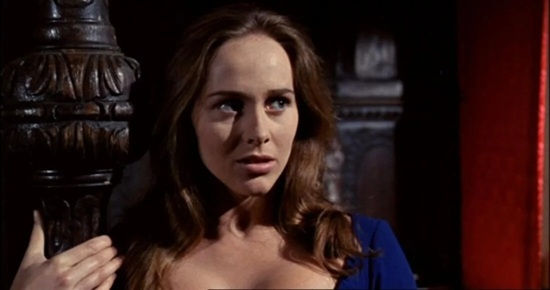
Witchfinder General follows ‘witch hunter’ Matthew Hopkins and his henchman, John Stern, moving from one vulnerable, terrified village to the next. What makes them so terrifying isn't any kind of supernatural power, it's their entirely mercenary motivation. They're just grifters, exploiting the lawlessness of the Civil War and getting paid handsomely by paranoid townsfolk to extract confessions from supposed witches, before executing them for a tidy profit. The narrative here takes a very deliberate approach to showing how this grift destroys innocent lives. It focuses heavily on a specific plot point that completely subverts traditional 1960s horror tropes because the monster isn't an otherworldly creature, it’s a corrupt human exploiting a broken justice system. Hopkins and Stern arrive in this small town where the local priest is accused of witchcraft. The priest has a niece, Sarah, so facing the imminent execution of her uncle, she makes this desperate, horrifying sacrifice. She offers herself to Hopkins sexually in exchange for her uncle's life. Hopkins, operating completely without a moral compass, gladly accepts this horrific arrangement. He takes what he wants from Sarah under the guise of giving her uncle an official pardon. But he must keep moving. The machinery of his grift requires him to go to the next town and he gets called away on other business, leaving Sarah behind, fully exposed to the cruelty of his henchman, Stern. He discovers the arrangements Sarah had with Hopkins, and he violently assaults her himself. The layers of betrayal just compound from there because when Hopkins eventually returns and discovers Stern's assault, his reaction isn't moral outrage. He simply decides that Sarah is now tainted, meaning she's no longer of any use or interest to him, so he casually breaks his promise and executes her uncle anyway. It's just a staggering display of callousness. The cruelty isn't a byproduct of their work; the cruelty is the work. That single act of profound injustice sets the driving revenge plot into motion. Sarah's fiancé, a soldier serving in Cromwell's army, learns of the atrocities committed against Sarah and her uncle, and he makes a fateful decision to abandon his military post. He deserts the war effort entirely and dedicates his life to a single, consuming purpose: hunting down and killing Hopkins and Stern.
Steering that punishing storyline was an English director named Michael Reeves. The material is handled with this blunt force that was highly unusual for the late 1960s and Reeves pulled absolutely no punches here. He refused to shy away from the nastiness of the subject matter, presenting the violence and the corruption with a stark realism that feels incredibly mature for a filmmaker of his age. This makes his personal story even more tragic because Reeves died of an accidental drug overdose the very next year in 1969, only twenty-five years old. To have that level of cynical maturity, that clear and uncompromising cinematic vision at twenty-five, and then to have it extinguished so abruptly, it was just a massive loss to the genre. Reeves’ death is one of the great “what ifs?” of British filmmaking because in his short career, he made such an indelible impact that he would have only gone on to greater things.

But what's fascinating here is that the true horror of this film, and the reason it maintains such a heavy suffocating atmosphere, it isn't the fictional revenge plot constructed around Sarah and her fiancé. And it isn't even the tragic premature loss of its director. The most startling revelation we're dealing with is the historical grounding. Hopkins wasn't an invention of a screenwriter trying to push the boundaries of 1960s cinema, he was a real flesh and blood person. Audiences are so conditioned to watch horror movies and comfort themselves with the knowledge that the villain is just a cinematic bogeyman or a man behind layers of make-up and a mask. But Hopkins was a real pioneering force in English witch hunting. He literally bestowed the title of ‘Witchfinder General’ upon himself and just proceeded to tear through the eastern counties of England. The statistics from his actual historical campaign are staggering and really underscore the hyper concentration of his violence. Between 1645 and 1646, so a period of just over a year, well over two hundred people were labelled as witches and put to death under Hopkins’ direct influence. To put that in perspective, that is more people executed for witchcraft in a fourteen-month span than in the previous century of English history combined. Hopkins capitalized on the primitive fears of an uneducated peasantry, using the chaos of the Civil War to carve out an incredibly lucrative and comfortable life for himself.
The film doesn't sugarcoat his methods either. The torture and executions depicted on screen are deeply grounded in historical fact. It presents a visceral reality rather than a stylized one. There is a scene where accused individuals are bound and dropped into castle moats to see if they float. Now, on the surface, to a modern viewer, that sounds like pure madness, but it was rooted in a very specific, albeit bizarre, theological logic of the time. The underlying logic of the water test, or swimming a witch, as they called it, was tied to the sacrament of baptism. The belief was that water, being a pure element used to cleanse original sin, would physically reject anyone who had forsaken their baptismal vows to serve the devil. If a person floated, the water was rejecting them, thus proving their guilt of witchcraft and they’d be promptly dragged out of the water to be executed in a manner befitting a witch. However, if they sank, then the water was accepting them, thus proving their innocence. But the tragic irony, of course, is that the innocent would often drown in the process of being vindicated. It's a perfect Catch 22 situation, designed entirely to ensure a guilty verdict and secure the Witchfinder's fee. And the executions are portrayed with a horrifying lack of glamor. There's one particularly brutal sequence late in the film where Hopkins and Stern preside over a screaming woman who is bound to a ladder and slowly lowered into a roaring fire. It's awful and agonizing to watch. I’ve seen hundreds of graphic horror films over my years but there’s something raw and visceral watching this execution sequence.
The physical brutality is incredibly difficult to stomach, yet the most terrifying aspect of the history the film is examining isn't just the overt violence committed by men like Hopkins. It's the psychology of the mob. The film masterfully captures the passive and often complicit nature of the general population. The everyday peasantry didn't just stand by and watch this barbarism; they actively condoned it. Many became willing, enthusiastic participants. The arrival of the Witchfinder was treated as an opportunity to settle scores. Neighbours who had petty land disputes or scorn lovers holding on to resentment would suddenly take advantage of the societal breakdown. They point the finger and label someone a witch just to settle their own personal vengeance, knowing full well that their accusation would lead to imprisonment, torture, and a horrific death for that person. It really forces a confrontation with the fragility of the social contract – that agreement we must live in respect, peace and harmony with each other. It demonstrates how quickly morality evaporates when fear, uncertainty, and a sudden vacuum of authority are introduced into a community. The witch hunts weren't just top-down oppression from the government; they were fuelled by lateral neighbour-on-neighbour betrayal. We all want to believe that solidarity and basic human decency would win out during a crisis. But history and the stark reality presented in this film shows us how easily everyday people can be manipulated into destroying each other, either to deflect suspicion from themselves or just to settle a petty, long-standing score. You only need to look at how people started reacting to each other during the Covid-19 lockdowns around the world – here in the UK, people were fighting in supermarket aisles for the last pack of toilet paper!
That mechanism of psychological manipulation is the very engine of the film. It requires a central performance capable of balancing charm, authority, and utter ruthlessness. The actor portraying Hopkins had to make the audience believe that this man could walk into a town and convince neighbours to murder one another which brings us to Vincent Price. Beloved for his slightly hammy, theatrical, larger-than-life performances, he often played the cartoony, tragic, gothic villain perfectly. But his portrayal of Matthew Hopkins in Witchfinder General is a complete departure from that persona. It operates on an entirely different frequency. He strips away all the theatricality and delivers a performance that is cold, confident, and deeply calculating. He introduces a profound ambiguity to the role that elevates the entire narrative. You’re constantly trying to decipher his internal reality. Does Hopkins genuinely believe the religious rhetoric he's spouting? Does he think he's doing God's holy work by cleansing the countryside of demonic influence? Or is he nothing more than a despicable, cynical grifter who's fully aware he's abusing his unchecked authority purely for financial gain and sexual exploitation? The brilliance of Price's performance is that he never gives the audience a definitive answer. He balances on that line perfectly. We see him constantly calculating, always plotting his next manoeuvre to stay ahead of the magistrates or the soldiers who might eventually restore order and end his reign. He always seems to slip away from consequence, which creates a desperate tension. The audience is forced to watch him get away with profound atrocities time and time again and it builds this deep visceral need to see him face some form of comeuppance. Price himself considered this to be the finest performance of his entire career, which is a massive statement given his extensive filmography and it’d be hard to argue against that.

Price’s work as the titular character is a masterclass in grounded malice and this is housed within a very deliberate, specific visual approach taken by Reeves. When discussing the violence of the torture sequences, the term tasteful is often applied to this film's direction, distinguishing it from other works in the genre. When you look at the horror films that followed in the 1970s, particularly the European exploitation cycle focusing on the Inquisition or witch trials, directors often lean heavily into eroticism and perversion. They would use the historical setting as an excuse to showcase gratuitous nudity, frequently featuring young women in highly stylized, almost fetishist torture scenarios. To put it bluntly - half-naked hotties hanging from chains, that sort of thing. But Witchfinder General completely rejects that exploitative lens. The violence here is never meant to titillate the audience. There is no stylistic glorification. It's presented as brutal, ugly, and fundamentally unglamorous. It's the difference between character-driven horror and sheer exploitation. Because Reeves refuses to make the gore the focal point or to sexualize the suffering, the actual human toll hits the viewer so much harder. It commands respect rather than just providing cheap shock. That uncompromising stark tone is established in the very first minutes of the film, the opening sequence a masterclass in setting expectations. It drops you right into the bleak reality, a group of villagers is seen dragging an accused woman up a windswept hill. A local priest stands by calmly reading from the bible, providing religious sanction to the brutality. The scene simply ends with the woman hanging from the end of a noose against a grey sky. There is no sweeping score, no triumphant villain monologue, just the cold mechanics of a localized murder. It promises the audience a deeply uncomfortable ride, and it absolutely delivers.
While Price is the main antagonist, he isn't carrying this oppressive atmosphere on his own. The supporting cast does a tremendous amount of heavy lifting to make this lawless 17th century world feel lived in and genuinely threatening. Robert Russell, the actor who plays Stern, Hopkins' henchman, is equally loathsome. Russell provides the perfect counterweight to Price. While Hopkins is the calculating, sharply dressed architect of the misery, Stern is the blunt instrument. He brings a phenomenal, scowling physicality to the role, embodying the sheer thuggish brutality required to execute Hopkins' intellectualized cruelty. Ian Ogilvy and Hilary Dwyer, the two young lovers at the heart of the revenge plot, do what they can with the material, but they’re completely overshadowed by the antagonists here and no one can hold that against them. Witchfinder General isn't without its minor structural flaws either, particularly the pacing of the third act and the climax. After building such an immense amount of tension and putting the protagonist through an agonizing gauntlet of suffering, the final confrontation between Hopkins and those seeking vengeance feels somewhat constrained. It lacks the grand, cathartic scale that the build-up seems to promise, and the narrative concludes rather abruptly.
Final Verdict
But even with a slightly rushed conclusion, the sheer weight of what precedes it secures the film's legacy. It is one of the most sinister and relentlessly bleak British horror films ever committed to celluloid. It really is a piece of art that leaves a permanent, lingering dread. Witchfinder General stands as a monumental classic and I hold it in such high esteem that I rank second only to The Wicker Man in terms of British horror films that embed themselves into your psyche and just refuse to leave. The film captures a distinct cinematic bravery that belongs entirely to 1968, stripping away the comforting illusion of the supernatural that the likes of Hammer and Amicus had conditioned audiences to believe in. Real-life barbarism recorded in our history books, the things ordinary human beings have willingly done to one another for profit or petty revenge, is infinitely more terrifying than any fictional monster any writer could invent.
Witchfinder General is about much more than a piece of vintage entertainment; it's an exercise in historical memory and understanding the mechanics of our own dark history. Specifically, how ordinary citizens can be manipulated into becoming complicit in atrocities. One doesn’t need to look too far into world history to see so many examples from this time period through both World Wars and into the present day. It trains us to recognize the warning signs when power, authority, and collective fear are being weaponized in our own time. It is a mirror held up to the most uncomfortable parts of our shared human nature. Chaos was the fertile soil that allowed opportunistic predators like Matthew Hopkins to thrive. Consider how times of intense political, social, or economic chaos continually create the perfect breeding ground for new generations of modern-day witch hunters. When the traditional rules of order temporarily break down today, what forms do these self-appointed punishers take in our modern, hyper-connected digital society? ICE agents trawling the streets of America? Covid-19 social distancing enforcers? Religious zealots enforcing harsh versions of their own faiths? Give them an inch and they’ll take a mile.
 |
Witchfinder General Also Known As: The Conqueror Worm Director(s): Michael Reeves Writer(s): Tom Baker (screenplay), Michael Reeves (screenplay), Louis M. Heyward (additional scenes) Actor(s): Vincent Price, Ian Ogilvy, Rupert Davies, Hilary Heath, Robert Russell, Nicky Henson, Tony Selby, Michael Beint Duration: 86 mins |  |
|---|


