


Gorgo (1961)

"Like nothing you've ever seen before!"

Plot
A group of fishermen discover a giant monster off the coast of Ireland. Sensing the opportunity for a quick profit, they immediately capture it, drag it all the way back to London, and plan to put it on display in a circus. The fishermen think they have captured this terrifying apex beast. What no one realises is that the monster they have chained up in London is actually just an infant. Its mother is still out there in the ocean. She is almost ten times larger than the infant, and she is coming to look for her child.
Review
In the pantheon of cinematic giant monsters there are some iconic figures. The Americans had King Kong. The Japanese had Godzilla. The British seem to have pulled the short straw with Gorgo. Actually maybe Denmark did with Reptilicus but these two are hardly top-of-the-range monsters. Penned after the popularity of the giant monster phase of the late 50s, Gorgo at least has some decent pedigree and isn’t just some fly-by-night, amateur production thrown together in a weekend. Director Eugène Lourié was no stranger to the giant monster genre, having helmed the successful The Beast from 20,000 Fathoms a few years earlier and then the lesser known The Giant Behemoth. But even the novelty of seeing London take a beating from a giant monster for a change can't really disguise the fact that Gorgo is middling entertainment, good for a laugh and chuckle at how things were back in the day.
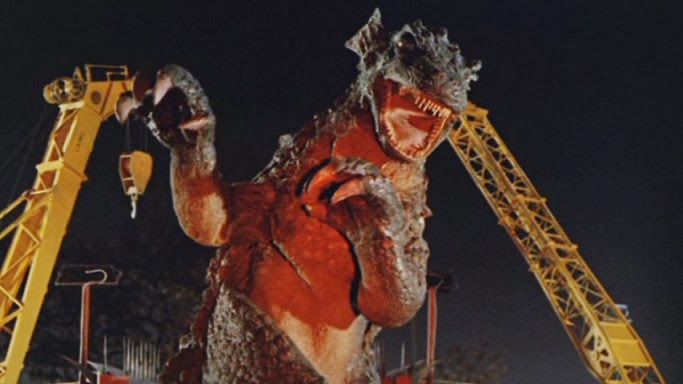
Perhaps Gorgo tries a bit too hard to challenge the likes of Godzilla and copies from it a little too much at times. Interestingly the title creature isn't just a by-product of atomic testing but simply something which has never been discovered before. The monster isn't a physical manifestation of our technological sins or a punishment for splitting the atom. It's just an ancient part of the natural ecosystem that we foolishly decided to commodify, much like King Kong. Having Gorgo trash London in the search for her baby is a little more touching and heart-rendering than simply having Godzilla smash up Japan because he’s angry. She isn't just smashing buildings because she's in a blind, mindless rage or because she's an unstoppable force of pure malice. Fundamentally, this is a rescue mission, and this alters how you consume the on-screen destruction. This motivation adds a profound layer of humanity to the monster. It is arguably the most primal, desperate feeling a living creature can experience. Now, take that incredibly grounded emotion and scale it up to a beast that is hundreds of feet tall, wading through a major metropolitan city. You want her to get her baby back regardless of how much of London must be levelled to make it happen and you end up rooting for the monster.
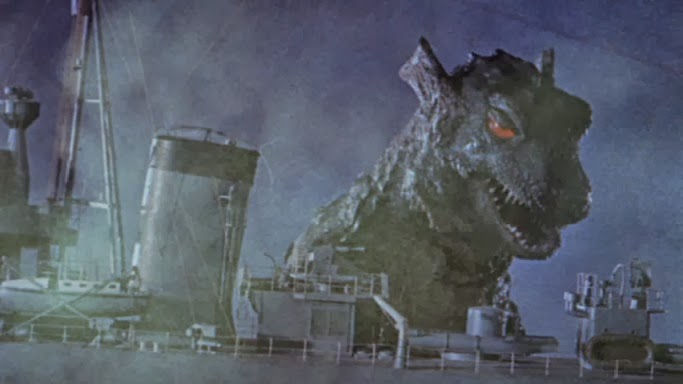
Audiences in the 1950s and 60s were so accustomed to seeing the Empire State Building or Japanese cityscapes being crushed that seeing Big Ben or the River Thames under attack is a genuinely unique selling point - seeing famous English landmarks being laid waste to as opposed to the Tokyo Tower being destroyed for the tenth time gives it a bit of an edge! Gorgo sticks to the drill and doesn't do anything different in the slightest. The monster suit doesn't look too bad but it's so obvious that these are miniature cities getting wasted and no one seemed to try and even make them look remotely realistic. Apparently, Lourié tried to recruit both Willis O'Brien and Ray Harryhausen to provide stop motion special effects but had to settle for the much less prestigious man-in-a-suit route instead. Plenty of model cars and miniature buildings get wasted and a lot of people run around screaming. You know the drill with big monster films. It completely lacks the intricate detailed craftsmanship that you see in the absolute best examples of the genre where the miniatures are so well lit and photographed that they fool the eye. My pet hate about Gorgo and something which really spoils the film is the awful editing and day-for-night continuity which hampered many of the Japanese kaiju films and is something I wouldn't have expected as much from a British production from the 60s. When the camera shows the monster, it's trashing London at night. But when it switches to the stock footage of the planes flying to attack, it's daytime. Did anyone ever hear of continuity?

Looking back on it after a second viewing, Gorgo wasn't that bad and it could have been a lot worse. The monster scenes are alright, but the story seems to lack any sort of urgency. It's flat, dull and rather uninvolving where the human characters aren't interesting in the slightest and everything goes at a leisurely pace, even Gorgo when she's wading through London. You would expect a mother desperately searching for her captive baby to be moving with frantic, terrifying speed, tearing through obstacles with absolute desperation. You could say it's typically British and I could imagine one of the some stiff upper-lipped character calming saying something like "Dear me, there's a giant monster destroying London. Whatever should we do, chaps?" Everyone is so subdued on the cast in the face of this destruction. The characters are devoid of genuine fear or raw emotion. While residents in other monster movies are running for their lives in sheer terror, screaming in the streets, the characters in Gorgo seem merely mildly inconvenienced. You cannot take the threat seriously, because the film itself barely seems to register the severity of its own threat.

Even when the execution is clunky and even when the editing is a mess, the underlying attempt to localize this massive global cinematic trend is a fascinating piece of pop culture history. Legendary horror director John Carpenter made an unreleased short fan film called Godzilla Vs Gorgo which he completed during college to experiment with special effects. Gorgo might not be the most famous monster out there but she influenced a lot of people without realising.
Final Verdict
Gorgo isn't anything special and is more for kids than Godzilla or King Kong were but at least London finally got a stomping after New York and Tokyo have been smashed for so long. A Saturday afternoon timewaster if there ever was one and showcases the enduring appeal of the giant monster genre itself. It proves that the core concept, a massive creature reminding humanity of its own insignificance, is so deeply powerful that it transcends borders and budgets. You can see how different cultures take this universally recognized formula and attempt to inject their own local flavour into it. The Japanese used the framework to process profound atomic trauma. The Americans used it to explore the untamed frontiers of the natural world. The British come up with a surprisingly empathetic monster narrative.
 |
Gorgo Director(s): Eugène Lourié Writer(s): Robert L. Richards (screen story), Daniel James (screen story) Actor(s): Bill Travers, William Sylvester, Vincent Winter, Christopher Rhodes, Joseph O'Conor, Bruce Seton, Martin Benson, Maurice Kaufmann Duration: 78 mins |  |
|---|


